
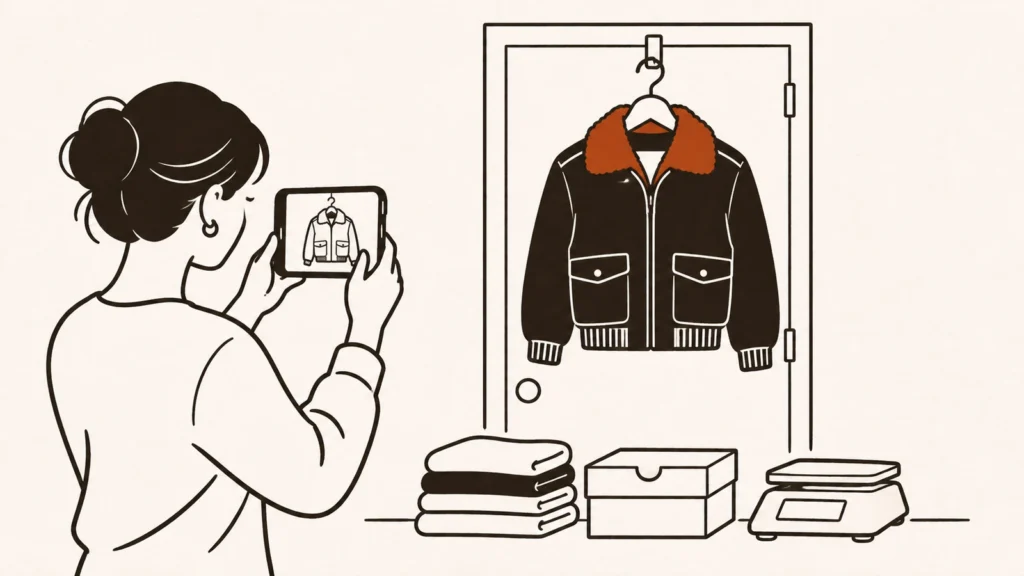
Reselling means selling used or pre-owned items for profit: clothes from your own wardrobe, thrift-store finds, sneakers, phones, books or collectibles. Resale apps and marketplaces give you buyers, payment protection and, often, shipping labels. Some sell the item for you; on others you list, ship and handle buyers yourself.
In this guide
- What reselling is
- How resale platforms work
- What reselling really pays
- The kinds of resale platforms
- How to choose a platform
- Your first steps
- Costs, taxes and risks
- Red flags to watch for
- How to build your skills
- Recommended resources
- Owen’s take
- FAQ
1. What reselling is
Reselling starts, for most people, with a cleared-out wardrobe. You list a few things you no longer wear, they sell, and you realise strangers will pay for items you’d have given away. From there, some people stop at decluttering, and others start sourcing: buying underpriced items at thrift stores, garage sales or clearance racks and selling them for more.
The market is large and growing. ThredUp’s 2026 Resale Report found that the US secondhand apparel market grew 13% in 2025, nearly four times faster than the wider clothing market, and that 59% of consumers bought secondhand clothing that year.
Reselling is different from running an online store. You usually sell one-off items, each with its own photos and description, rather than stocking many copies of the same product. That makes it easy to start and harder to scale.
Decluttering or business?
The line matters. Selling your own things is decluttering: usually small amounts, often below what you paid, and in most countries not taxed. Buying items specifically to resell is a business, even a small one, with stock, records and taxable profit. Many people move from one to the other without noticing. Decide which you’re doing, and keep records from the day you start buying stock.
2. How resale platforms work
Resale platforms follow three main models.
Marketplaces. You photograph and list items, set a price, and the platform handles payment. When something sells, you ship it, often with a prepaid label, and receive your money after delivery. eBay, Poshmark, Depop and Mercari work this way.
Consignment. You send items to the company, which photographs, prices and sells them for you, and pays you a share. It’s the least work but the smallest cut. ThredUp and The RealReal are examples.
Local classifieds. Buyers contact you and collect in person, often paying cash. Fees are low or zero, but there’s no payment protection. Facebook Marketplace, OfferUp and Wallapop work this way.
A newer model, live selling, lets you sell through livestreamed auctions. Whatnot is the best-known example.
3. What reselling really pays
Your profit is the sale price minus what you paid for the item, platform fees, shipping and packaging, and your time photographing, listing and posting.
Fees vary widely:
- eBay charges most US sellers a final value fee of 13.6% of the total sale in most categories, plus a small per-order fee. In the UK, private sellers pay no final value fee on most items.
- Some apps, such as Vinted and Depop in the US and UK, charge the buyer instead of the seller.
- Consignment services keep a large share of the price in return for doing the work.
A few patterns hold across platforms:
- Brands sell, generic doesn’t. Known labels, limited sneakers and popular tech hold value.
- Good photos sell faster. Clear light, a plain background and every angle beat a crumpled photo on the bed.
- Speed matters. Fast shipping earns good ratings, which help future sales.
Pricing and offers
Most resale apps let buyers make offers, and many buyers expect to negotiate. Price a little above the lowest you’d accept, so you have room to agree. Check sold prices for the same item in similar condition, not the asking prices of listings that never sold. If an item doesn’t move in a few weeks, lower the price in small steps or refresh the listing with better photos. Bundling several items for one buyer saves you shipping time and often wins a sale that a single item wouldn’t.
4. The kinds of resale platforms
General marketplaces
Sell almost anything to a large audience.
Fashion apps
Clothes, shoes and accessories.
- Poshmark, Depop, Vinted and Curtsy
- Grailed for menswear and streetwear
- Kidizen for children’s clothes and baby gear
Luxury and authenticated resale
High-value items checked for authenticity.
- The RealReal and Vestiaire Collective for designer fashion
- StockX for sneakers, streetwear and collectibles
Consignment
Send items in and let the company sell them.
- ThredUp and The RealReal
Local buying and selling
Sell to buyers nearby.
- Facebook Marketplace and OfferUp in the US
- Wallapop in Spain and OLX in many countries
Tech and books
- Swappa for used phones, laptops and tech
- BookScouter to compare buyback offers for used books
5. How to choose a platform
Ask five questions first.
- What are you selling? Fashion, tech, luxury and collectibles each have their natural homes.
- Who pays the fees? Some apps charge sellers, some charge buyers, and fees are calculated differently.
- Do you want to ship? Local apps avoid shipping; marketplaces need you to pack and post.
- Is the item worth authenticating? High-value designer goods and sneakers sell better where buyers trust the checks.
- Is it available where you live? Many resale apps work in only one or a few countries.
Many resellers list the same item on two or three platforms and remove it everywhere once it sells.
6. Your first steps
- Start with what you own. Clothes, books and gadgets you no longer use are free stock to learn on.
- Check sold prices. Look at what similar items actually sold for, not what sellers are asking.
- Take good photos. Daylight, a plain background, front, back, labels and any flaws.
- Write honest descriptions. Brand, size, measurements, condition and flaws reduce returns.
- Ship fast and pack well. Ratings from your first buyers shape your future sales.
- Then source carefully. Once you know what sells, buy only items you’re confident you can resell at a profit.
Where resellers find stock
Once your own wardrobe is empty, you need sources. Common ones are thrift and charity shops, garage and yard sales, estate sales, flea markets, clearance racks and online lots. Some resellers buy bulk bundles and sort them; others hunt for single high-value pieces. Whatever you choose, carry your phone, check sold prices before you buy and set a maximum price for each kind of item. A cheap find that never sells costs you more than you think.
Listing on more than one platform
Listing the same item on two or three apps reaches more buyers. The risk is selling it twice. Keep a simple list of where each item is listed, and remove it everywhere as soon as it sells. Crosslisting tools can automate this, for a monthly fee, once you’re selling enough to justify it.
7. Costs, taxes and risks
Fees and shipping. Platform fees, payment processing, shipping and packaging all come out of your profit. Factor them in before you buy anything to resell.
Unsold stock. Items you buy to resell can sit for months. Start small and track how quickly things sell.
Taxes. Selling your own used items for less than you paid is generally not taxable. Buying to resell is a business, and profits are taxable. In the US, platforms send a Form 1099-K above $20,000 and 200 transactions a year, but business income is taxable even below that.
Returns and disputes. Buyers can claim an item wasn’t as described. Accurate descriptions and photos are your best protection.
Counterfeits. Selling fakes, even by accident, can get your account closed and carry legal risk. Buy branded items from sources you trust.
8. Red flags to watch for
- Buyers who want to pay off-platform. It removes your protection and often breaks the platform’s rules.
- Overpayment scams. Anyone who “accidentally” pays too much and asks for a refund of the difference is running a scam.
- Requests for your phone number or a code. Scammers use verification codes to take over accounts.
- Fake payment emails. Check your balance in the app, not in an email, before shipping.
- Local meetups in isolated places. Meet in busy public spots, ideally with someone you know.
9. How to build your skills
- Learn your category. Knowing brands, models and what makes an item valuable is the core skill.
- Study sold listings. They show what sells, at what price and how fast.
- Improve your photography. A phone, daylight and a plain wall are enough once you learn the basics.
- Learn to spot fakes. Labels, stitching, serial numbers and packaging tell you a lot.
- Keep simple records. Cost, sale price, fees and shipping for each item show your real profit.
10. Recommended resources
These are listed in our Resources section.
- Coursera and Alison for free and low-cost courses in small business basics, bookkeeping and product photography
11. Owen’s take
Reselling is one of the most hands-on eSide hustles, and one of the most honest: you can see exactly what you paid, what you sold for and what’s left. Start with your own wardrobe to learn the platforms without risking money. When you begin sourcing, pick one category you genuinely know, check sold prices before every purchase, and remember that stock sitting in a cupboard isn’t profit until it ships.
FAQ
What sells best on resale apps?
Known brands, limited sneakers, designer accessories and popular tech usually sell fastest and for the most.
Which resale app has the lowest fees?
It depends on where you live. Some apps, such as Vinted and Depop in the US and UK, charge the buyer instead of the seller.
Do I pay tax on items I resell?
Selling your own used items at a loss usually isn’t taxable. Buying items to resell for profit is a business, and profits are taxable.
Is reselling clothes worth it?
It can be, especially for branded items. Your time photographing and shipping is the biggest hidden cost.
How do I avoid scams when selling online?
Keep payment and messages on the platform, check your balance in the app before shipping, and never refund an “overpayment”.
Sources
- ThredUp, “ThredUp’s 14th Annual Resale Report” (April 2026): https://newsroom.thredup.com/news/thredup-14th-resale-report
- eBay, “Selling fees”: https://www.ebay.com/help/selling/fees-credits-invoices/selling-fees?id=4364
All 19 Reselling listings
-

BookScouter: Find the Best Price for Your Used Books
BookScouter is a free price comparison site for selling used books, especially textbooks. You enter or…
-

Curtsy: A Simple App for Selling Women’s Fashion
Curtsy is a US resale app for women’s clothing, shoes and accessories. It’s built around speed:…
-

Depop: A Fashion App With No Selling Fee in Key Markets
Depop is a fashion resale app popular with younger buyers looking for vintage, streetwear and one-off…
-

eBay: The Biggest General Marketplace for Resellers
eBay is the oldest and broadest online marketplace for selling almost anything, from clothes and electronics…
-

Facebook Marketplace: Free Local Selling to a Huge Audience
Facebook Marketplace is the buying and selling section of Facebook, where people list items for local…
-

Grailed: Resell Menswear, Streetwear and Designer Pieces
Grailed is a resale marketplace focused on menswear, streetwear, sneakers and designer fashion. Founded in 2013…
-

Kidizen: Resale for Kids’ Clothes and Gear
Kidizen is a US resale marketplace for children’s clothing, shoes, toys and baby gear. Its buyers…
-

Mercari: A Simple US App With One Flat Fee
Mercari is a US marketplace app for selling used and new items: clothes, electronics, toys, home…
-

OfferUp: Sell Your Stuff to People Nearby
OfferUp is one of the largest US apps for buying and selling locally: furniture, electronics, tools,…
-

OLX: Classified Ads for Selling Locally
OLX is one of the best known online classifieds brands in the world: a place to…
-

Poshmark: Resell Clothes and Accessories From Your Phone
Poshmark is a social marketplace for secondhand and new fashion: clothing, shoes, bags, accessories, beauty and…
-

StockX: A Verified Marketplace for Sneakers and Streetwear
StockX is a marketplace for new, unworn sneakers, streetwear, trading cards, electronics and collectibles. It works…
-
Swappa: A Low-Fee Marketplace for Used Tech
Swappa is a US marketplace for used phones, tablets, laptops, consoles, smartwatches and other tech, running…
-

The RealReal: Authenticated Luxury Consignment
The RealReal is a US marketplace for authenticated luxury consignment: designer bags, clothing, shoes, jewelry, watches…
-

ThredUp: Let Someone Else Sell Your Clothes
ThredUp is a US online consignment and thrift store. You send a bag of clothes in…
-

Vestiaire Collective: Global Resale for Designer Fashion
Vestiaire Collective is a Paris-based resale marketplace for pre-owned luxury and designer fashion: bags, clothing, shoes,…
-

Vinted: Second-Hand Selling With No Seller Fee
Vinted is a European resale marketplace for clothes, shoes, accessories, kids’ items, books and home goods.…
-

Wallapop: Spain’s Free Second-Hand Marketplace
Wallapop is the leading second-hand marketplace app in Spain, used to sell almost anything: clothes, phones,…
-

Whatnot: Live Selling for Resellers
Whatnot is a live shopping marketplace. Sellers go live on video, show items one by one…