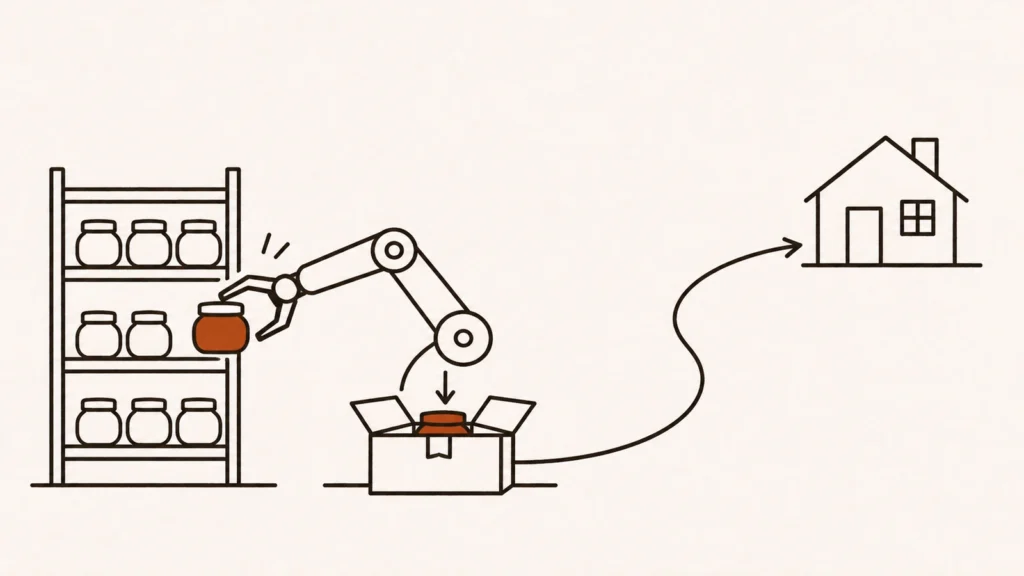
Automated dropshipping means running an online store where apps import supplier products, sync stock and prices, and forward orders to suppliers who ship directly to your customers. Automation saves time on admin, but it doesn’t create demand or profit. In a niche market, success still depends on choosing the right products, reliable suppliers, honest shipping promises and marketing that reaches the right buyers.
Dropshipping is often sold as passive income: set up a store, switch on automation and collect profits. In practice, it’s a retail business with thin margins, where you’re responsible for every order even though you never touch the product. This guide explains how automation fits in, why a niche helps, what the numbers look like and which legal and practical risks to plan for.
In this guide
- How dropshipping works
- Why niches work better than general stores
- What automation does, and doesn’t do
- Choosing suppliers
- The real margin maths
- Shipping promises and the law
- Marketing a niche store
- Risks to plan for
- Alternatives to dropshipping
- Owen’s take
- FAQ
1. How dropshipping works
- You list products from a supplier in your online store, usually built on a platform such as Shopify.
- A customer buys from you at your price.
- You, or your automation app, buy the item from the supplier at their price.
- The supplier ships it directly to your customer.
- You keep the difference, minus fees, ads, refunds and other costs.
You don’t hold stock, which keeps startup costs low. But you’re still the seller: the customer’s complaints, refunds and delivery problems are yours to solve.
2. Why niches work better than general stores
A general store selling a bit of everything competes with Amazon, Walmart and thousands of identical stores. A niche store focuses on a specific audience and their problems, such as gear for a particular hobby, products for a type of pet, or accessories for a particular profession.
Niches help because:
- Marketing is cheaper and more targeted. You know exactly who to reach and where they gather online.
- Content is easier to create. Guides, comparisons and tips build trust and search traffic.
- Customers trust specialists. A store that knows its subject sells more than one that just lists products.
- Repeat purchases are more likely. Enthusiasts come back for related products.
A good niche has a passionate audience, products that are hard to find in mainstream stores, enough price room for a margin, and items that ship easily without breaking.
3. What automation does, and doesn’t do
Dropshipping apps connect your store to supplier catalogues and handle repetitive tasks.
Automation can:
- Import products, descriptions and images into your store.
- Sync stock levels so you don’t sell items the supplier has run out of.
- Update prices when supplier costs change, based on rules you set.
- Forward orders to suppliers and pass tracking numbers back to customers.
- Send order and shipping emails.
Automation can’t:
- Choose a niche or products that people want.
- Make a supplier’s products better or ship them faster.
- Write the product pages and content that persuade buyers.
- Run profitable advertising on its own.
- Handle disputes, damaged goods and refunds with judgement.
Most supplier and automation apps charge a monthly fee on top of product costs, so include them in your budget.
4. Choosing suppliers
Your supplier is your warehouse, your packer and your delivery promise. Choose carefully.
- Location. Suppliers in or near your customers’ country usually deliver faster. Overseas suppliers can be cheaper but slower.
- Order samples. Buy the products yourself to check quality, packaging and delivery time.
- Check reliability. Look at reviews, response times and how they handle returns and damaged items.
- Understand returns. Know who pays for returns and where returned items go.
- Avoid branded and restricted products. Selling counterfeit or unauthorised branded goods can get your store and payment accounts shut down.
If you want to sell your own designs instead, print-on-demand suppliers such as Printful and Printify print and ship custom products for you. See our Print on Demand directory.
5. The real margin maths
A simple example for one order:
| Amount | |
|---|---|
| Your selling price | $40.00 |
| Product cost from supplier | $14.00 |
| Supplier shipping | $5.00 |
| Payment processing (example: 2.9% + $0.30) | $1.46 |
| Advertising cost per sale (example) | $12.00 |
| Profit before apps, refunds and your time | $7.54 |
That’s under 20% of the selling price before app subscriptions, refunds, chargebacks and customer service time. Advertising is often the biggest cost, and in competitive niches it can wipe out the margin completely. Run these numbers for every product before you list it, using your own costs.
Ways to improve margins in a niche:
- Bundle related products to raise the order value.
- Build organic traffic through content, email and community so you rely less on paid ads.
- Choose products with room for a premium, where expertise and presentation justify a higher price.
6. Shipping promises and the law
In the US, the Federal Trade Commission’s Mail, Internet, or Telephone Order Merchandise Rule applies to online sellers. It requires you to have a reasonable basis to expect you can ship within the time you advertise, or within 30 days if you don’t state a time. If you can’t ship on time, you must tell the customer, get their consent to the delay or offer a refund for unshipped items.
This matters for dropshippers because you depend on your supplier’s speed. Don’t promise fast shipping your supplier can’t deliver. The FTC has taken action against retailers whose shipping promises didn’t match reality. State delivery times honestly on product pages and checkout.
Other legal basics include sales tax rules, consumer protection rules on returns and refunds, product safety for items such as children’s products and electronics, and honest advertising. Check the rules in every country you sell to.
7. Marketing a niche store
- Content. Write guides, comparisons and how-tos for your niche. They bring search traffic and build trust.
- Short-form video. Product demonstrations work well on social platforms. TikTok Shop also lets you sell directly through videos.
- Email. Collect emails from day one and send useful content, not just discounts.
- Communities. Take part in forums and groups for your niche without spamming.
- Paid ads. Test small budgets and stop ads that don’t pay for themselves.
- Influencers and UGC. Creators in your niche can make content that sells. See our Influencer & UGC directory.
8. Risks to plan for
- Slow or late deliveries leading to complaints, refunds and chargebacks.
- Quality problems you can’t inspect before shipping.
- Supplier stockouts and price rises that break your listings and margins.
- Payment holds. Payment providers may hold funds for new stores with high refund rates.
- Ad account problems if customers complain or your claims are exaggerated.
- Copycats. Successful products are quickly copied by other stores.
- “Done for you” courses and stores. Be wary of anyone selling a pre-built, automated store that promises passive profits.
9. Alternatives to dropshipping
If dropshipping’s thin margins and supplier risks don’t appeal, consider:
- Print on demand, where you sell your own designs.
- Digital products, with no shipping at all. See our guide to the most profitable digital products.
- Reselling, where you control stock quality. See our Reselling directory.
- Handmade products on Etsy or Amazon Handmade. See our guide to Etsy vs Amazon Handmade.
You can compare store builders and marketplaces in our Ecommerce directory, and our guide to ecommerce platforms for beginners.
10. Owen’s take
Automation makes dropshipping easier to run, not easier to profit from. The stores I see working pick a niche they understand, test suppliers properly, tell customers the truth about delivery times and build traffic they don’t have to pay for every day. If someone sells you an “automated” store that runs itself, be sceptical. Treat dropshipping as a small retail business, and it can work. Treat it as passive income, and it usually doesn’t.
FAQ
Is automated dropshipping passive income?
No. Automation handles routine tasks, but you still need to choose products, manage suppliers, handle customer service and run marketing.
Do I need a niche to succeed at dropshipping?
Not strictly, but niche stores are usually easier to market and trust than general stores competing with large retailers.
How long can dropshipping delivery take?
It depends on the supplier’s location. In the US, you must have a reasonable basis for the shipping time you advertise, or ship within 30 days if you state no time.
What are the biggest dropshipping costs?
Product and shipping costs, advertising, payment processing, app subscriptions, refunds and chargebacks.
This guide is part of our Ecommerce section, with every platform we have checked in that area.
Sources
- Federal Trade Commission, “Business Guide to the FTC’s Mail, Internet, or Telephone Order Merchandise Rule”: https://ftc.gov/business-guidance/resources/business-guide-ftcs-mail-internet-or-telephone-order-merchandise-rule
- Federal Trade Commission, “Mail, Internet, or Telephone Order Merchandise Rule” (rulemaking page): https://www.ftc.gov/enforcement/rules/rulemaking-regulatory-reform-proceedings/mail-internet-or-telephone-order